
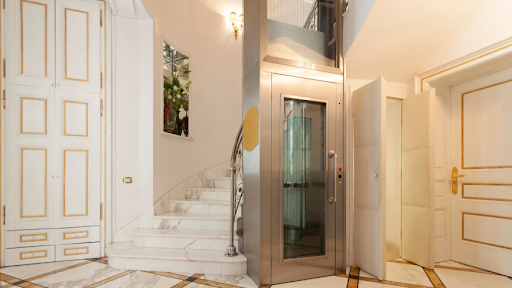
Homeowners seeking premium vertical transportation often prioritize comfort above all else when selecting a system for their residence. The sensation of gliding effortlessly between floors defines the luxury experience and sets superior systems apart from basic utility lifts. Engineering principles involving fluid dynamics play a crucial role in delivering this seamless movement without the jerky transitions found in older traction models. Investing in a hydraulic residential lift guarantees a travel experience that feels secure and exceptionally stable.
Incompressible Fluid Dynamics
The core concept relies on the physics of hydraulic oil, which is virtually incompressible under pressure. When the pump pushes fluid into the cylinder, it creates a direct and immediate lift action that does not suffer from the elasticity issues common with steel cables. Cable-based systems can experience a slight bounce or stretch when the car starts or stops, creating a sensation of weightlessness. In contrast, the column of oil supports the elevator cab on a solid foundation of fluid that eliminates this bounciness entirely, resulting in a ride that feels grounded and secure from start to finish.
Pump Valve Precision
Modern hydraulic systems utilize advanced electronic valves to control the flow of oil with incredible accuracy. These valves regulate the speed of the fluid to create a soft start and stop. Instead of an abrupt jolt when the elevator begins to move, the valve opens gradually, allowing the car to accelerate imperceptibly. This same feathering technique is applied as the car approaches the landing, ensuring a deceleration so gentle that passengers often do not realize they have stopped moving until the doors open. Professional technicians calibrate these valves to match the specific weight of the cab, ensuring consistent performance.
Isolation from Vibration
One of the distinct advantages of this technology is the ability to locate the pump and motor in a separate area away from the elevator shaft. This separation ensures that the noise and vibration generated by the machinery are not transmitted directly to the elevator car or the surrounding living spaces. Traction elevators often have the motor mounted directly on top of the rails, which can send hums through the building structure. By isolating the power unit, professional installers ensure that the only sensation inside the cab is the silent upward movement. This acoustic comfort is a key factor to consider when learning how to choose the right home elevator for your existing home, as it impacts the daily enjoyment of the amenity.
Heavy Duty Construction
The hardware used in hydraulic applications is typically robust and designed to handle significant loads without flexing. The heavy steel cylinder and piston provide a rigid spine that guides the elevator car, preventing the side-to-side swaying that can occur in cable-suspended systems. This rigidity is particularly important for individuals who experience motion sickness, as it provides a solid platform that feels like an extension of the floor. Professional installation ensures that these heavy components are anchored securely, providing a ride quality that remains consistent over decades of use.
Conclusion
The reputation for smoothness associated with hydraulic technology is well earned through simple physics and robust engineering. By utilizing the non-compressible nature of oil and precision valve control, these systems deliver a ride that is free from bounces and jolts. The ability to isolate mechanical noise further enhances the sense of luxury and refinement within the home. For homeowners who demand the highest level of comfort and stability, choosing this time-tested propulsion method is the surest way to achieve a superior vertical travel experience.